Making Makaton a second language at Acorns

Today, more than 100,000 children and adults in the UK use Makaton, either as their primary means of communication or as a supplement to speech.

Crucially, Makaton means that children who are non-verbal can communicate their needs and wants with their families, friends and carers. It also supports their development of other essential communication skills, such as attention, memory and recall, from an early age.

At Acorns, we embed Makaton across all three of our hospices to ensure every child is seen and heard – reflecting our commitment that no child should ever be left behind.  

We have a group of very passionate and hard-working people at Acorns dedicated to the widespread use of Makaton throughout the organisation. Debbie Easlea and Sharon Pearson, Co-Makaton Leads at Acorns Birmingham, share their efforts to make Makaton the ‘second language’ of Acorns. 

We are constantly adopting new ways to integrate Makaton in Acorns, Debbie says.

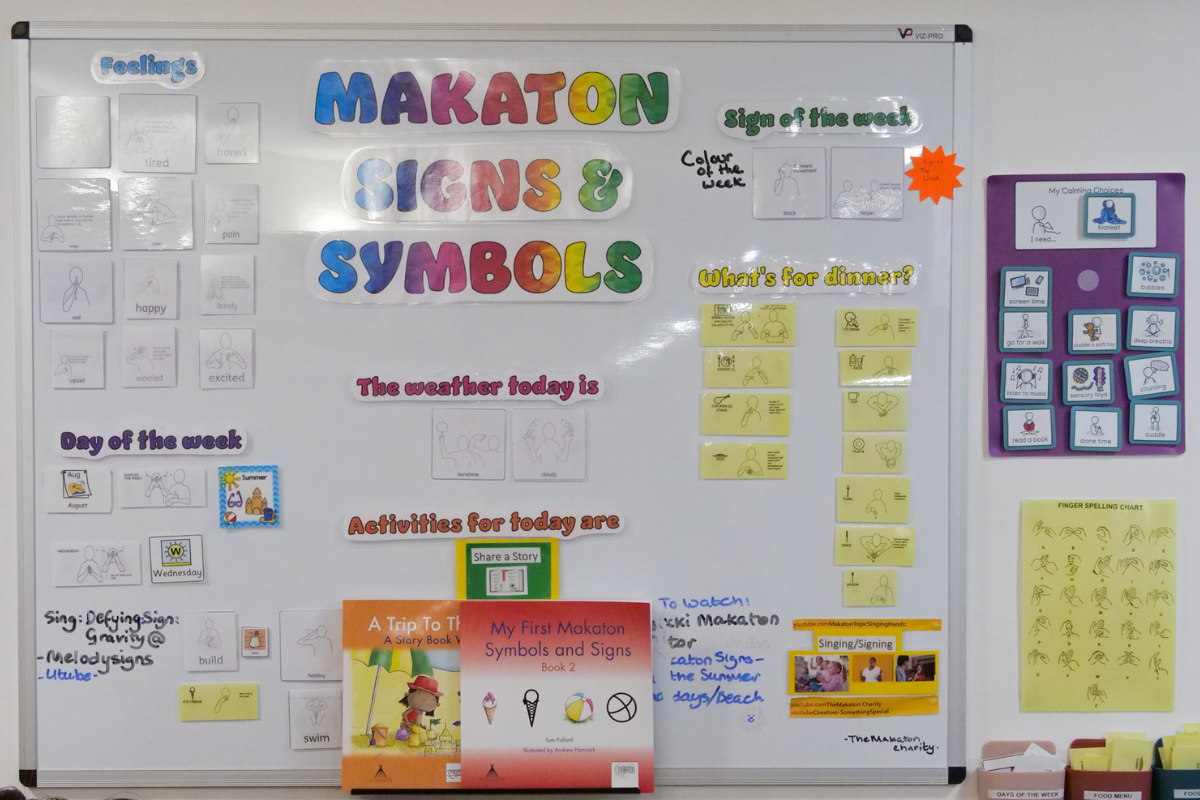
Whether it’s labelling every door in the hospice with a Makaton sign, setting up a dedicated display board to showcase everything Makaton, or teaching the children Makaton songs, Debbie shared the numerous ways we have adopted the language of Makaton. 

She also explained how Makaton enhances the excellent level of care that we strive to provide for every child: “One of our children is non-verbal, and Makaton is his main form of communication. Previously, when he’d be with us, we often noticed signs of frustration during his playtime.  

“He would yearn for certain toys, but we couldn’t always understand which ones he wanted. Now, with Makaton, we have a way of communicating with him effectively, and we know exactly when he’s asking for his favourite toys – dinosaurs!” 

Debbie (Co-Makaton lead) stood next to a Makaton signs and symbols board.

Providing the best possible care

But our commitment to Makaton isn’t just about enhancing playtime; it’s about addressing the fundamental needs of the children in our care. 

Debbie says: “Ultimately, our main goal is to provide the best possible care for every child. Communication is a fundamental right, and once we find a way to communicate with each and every child, regardless of their communication style, we truly create a home away from home. 

“I imagine Acorns without Makaton as like being in a hospital in a different country – being in pain and frightened and not being able to communicate. No one would want to be in that situation.” 

Sharing how we use Makaton in our hospices helps highlight why it is so important for communication. But our work hasn’t stopped there.

“We have created our very own Makaton choir,” Sharon beams.

“At the light switch on at Christmas we will be accompanying the carol singing with Makaton, dressed in our very own Acorns Makaton Choir t-shirts. This way, everyone can enjoy the carols.”

All this exciting work in Makaton happening at Acorns truly is contributing to our aim to make Makaton Acorns ‘second language’. 

Try them yourself

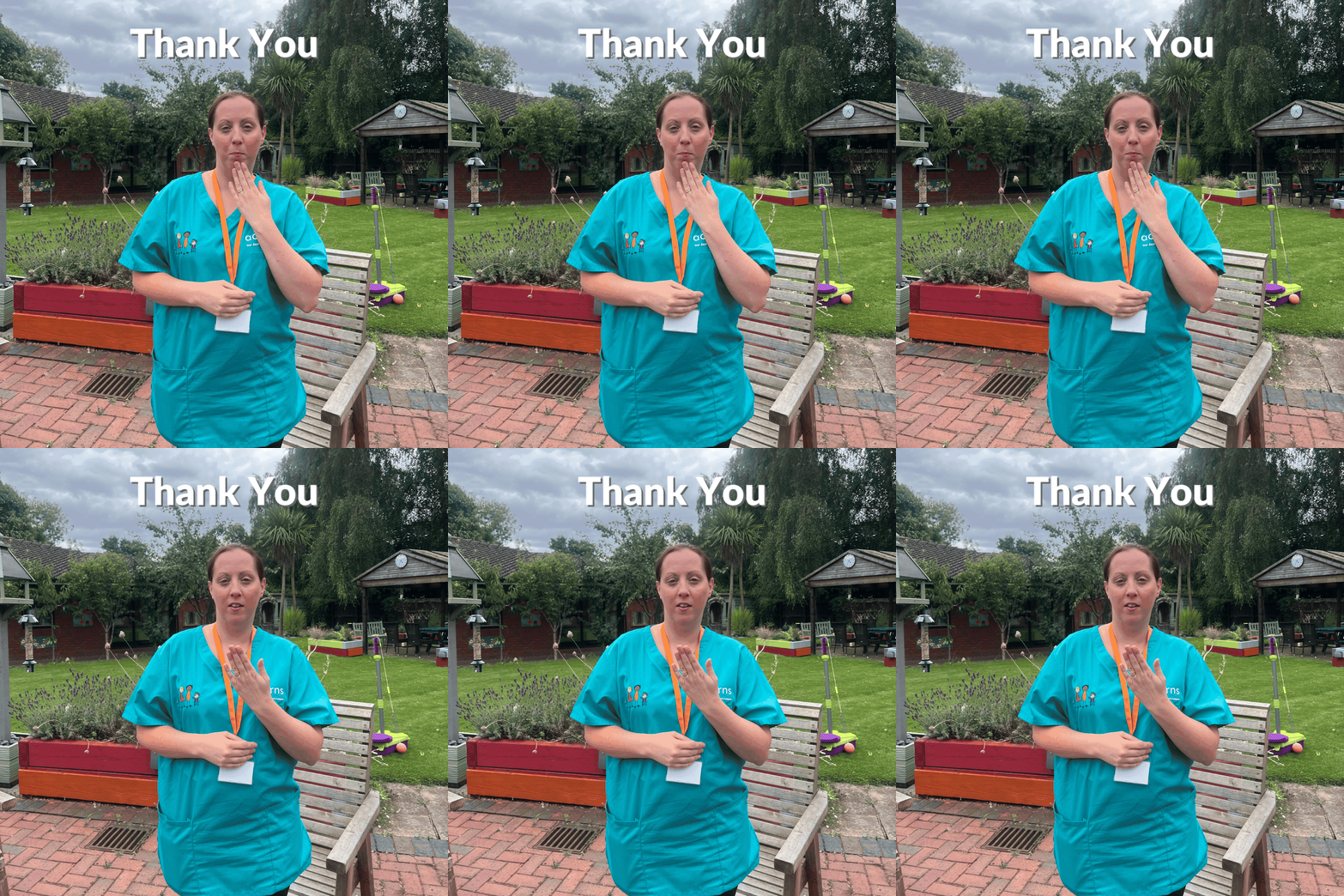
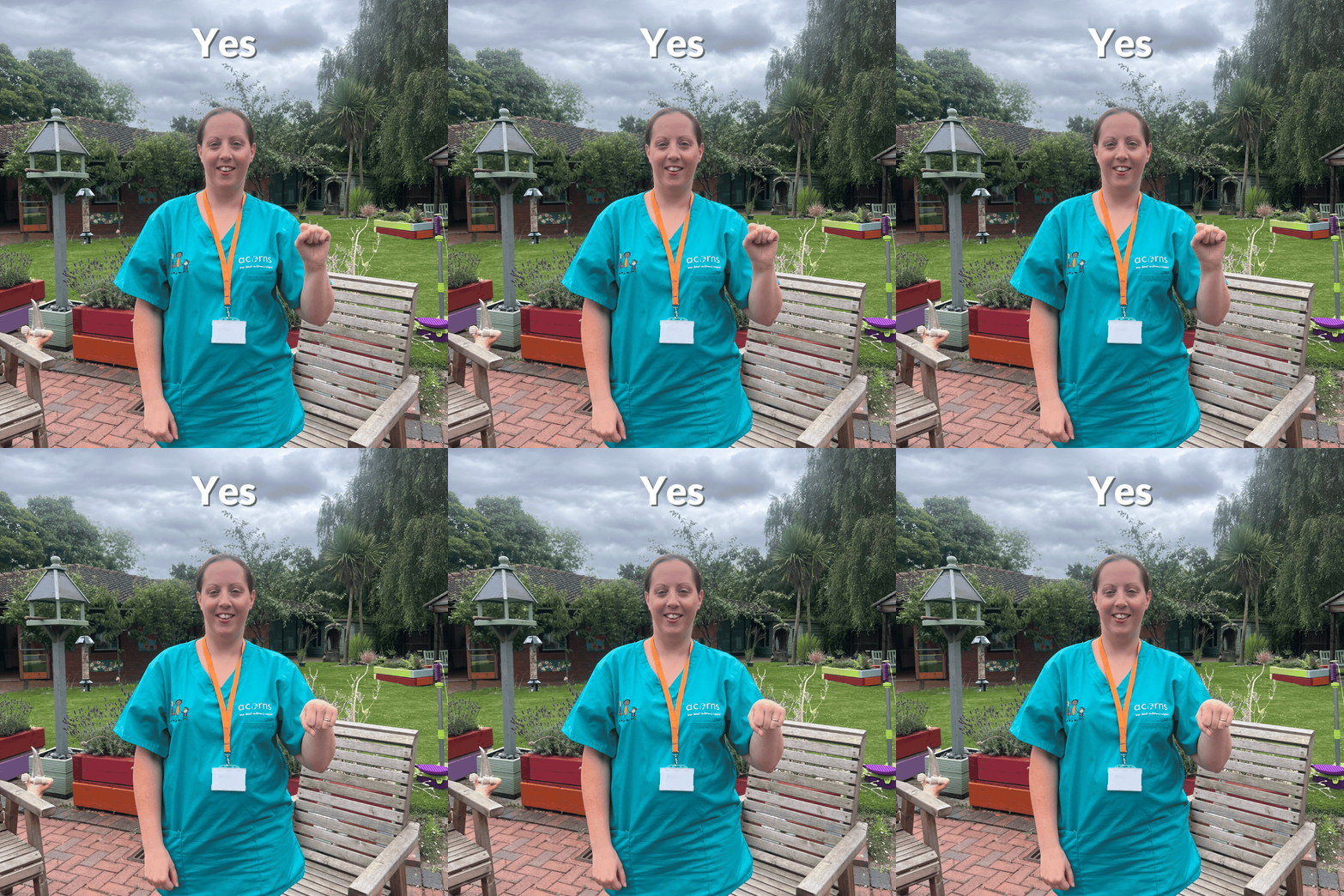
Below, our nurse demonstrate some simple Makaton signs that you can learn and use at home, making it part of your language. These signs are part of the daily tools we use at the hospice to ensure that every child’s unique communications needs are understood and supported. 

Recreate these Makaton fruit signs
A nurse signing Thank You in Makaton.