Why good-quality charity shop donations matter

Every year, around 1,500 tonnes of pre-loved items are donated to Acorns charity shops.

Those donations play an important role in helping us raise money for local children with short lives and their families. But not every donated item can be sold.

Items that are damaged, unsafe, dirty or incomplete can take additional time to sort and, in some cases, cost us money to recycle or dispose of. Taking a few minutes to check your donations before bringing them to a shop can help more of your items find a new home and raise vital funds for care.
What makes a good charity shop donation?

A good donation doesn’t have to be new or perfect.

A simple question to ask is:

Would someone else be happy to buy and use this?

In general, the best donations are:

  • Clean and dry
  • Safe to use
  • Complete
  • In working order
  • Free from serious stains or damage
  • Carefully packed where appropriate

Normal signs of use don’t necessarily mean an item can’t be sold.

In fact, some items with light wear, such as a missing button or small hole, may still be suitable for Acorns Not New, Not Perfect range.

How can unsuitable donations cost a charity money?

Every donation has to be handled by our retail teams and volunteers.

When you bring items to an Acorns shop, they need to be received, sorted and assessed before they can be prepared for sale.

Most donations can be sold or put to another useful purpose. However, some cannot be sold because of their condition, safety, cleanliness or completeness. Managing these items comes at a cost.

Unsuitable donations can mean additional:

  • Staff and volunteer time
  • Storage requirements
  • Recycling or disposal costs
  • Waste
  • Handling and transportation

That is why good-quality donations can make such a difference. The more donated items we are able to sell, the more income they have the potential to generate for children’s hospice care.

What condition should clothes be in?

Clothes, shoes and accessories should ideally be clean and undamaged, without significant stains or tears. Acorns also cannot accept branded uniforms.

Before putting clothes into a donation bag, check that they are:

  • Clean
  • Completely dry
  • Free from serious stains
  • Not badly torn or damaged

Damp clothing is particularly problematic because moisture and mould can also damage other items packed alongside it.

Shoes should be paired, and pockets and bags should always be checked for personal belongings.

A woman with blond hair and glasses, sorting through a wide range of donations at Acorns charity shop.

What about toys, books and household items?

The same basic principle applies: clean, safe and complete items have the best chance of being sold.

For toys and children’s items, check that important pieces are present and that the item is clean and undamaged. Acorns current donation guidance also asks that children’s toys and nursery items are CE marked.

Books should be reasonably intact, with their pages present and no significant damage. Acorns accepts books across genres as well as comics, CDs, DVDs and vinyl records.

For household items:

  • Wrap fragile items carefully
  • Check electrical items are in good working order
  • Keep essential cables and parts together
  • Make sure linen, curtains and blankets are clean and undamaged

Upholstered furniture also has specific fire-safety requirements. Acorns generally requires an attached fire-safety label, with an exemption for some pre-1950s upholstered furniture.

What condition should donated furniture be in?

Furniture donations need a little extra care because of their size and safety requirements.

Before donating furniture to Acorns, check that it is:

  • Clean and structurally sound
  • Complete and safe to use
  • Free from serious stains, rips or damage
  • Fitted with the appropriate fire-safety label where required

Upholstered furniture generally needs an attached fire-safety label. Pre-1950s upholstered furniture may be exempt, but items with rips or tears that expose the inner fabric may no longer meet the required safety standards.

Looking to donate furniture? Find out more about you can book a free furniture collection here.

Is your donation ready to give?

Download our quick guide to the condition your pre-loved items should be in before you donate them to Acorns.

Download our donation guide

Why can’t charity shops repair or clean everything?

It can be tempting to donate something because it could be repaired, cleaned or restored.

Unfortunately, that doesn’t necessarily mean a charity shop will be able to do it.

Repairs, specialist cleaning, replacement parts, safety testing and staff time can sometimes cost more than an item is likely to raise when it is eventually sold.

Charity shops therefore have to make practical decisions about which items can realistically be prepared for resale.

You don’t need to make everything perfect before donating. But giving items a quick clean and checking that they’re complete and usable can make a significant difference.

What happens to your Acorns donation?

When you donate to an Acorns charity shop, your items go through a simple journey.

1. Your donation is dropped off

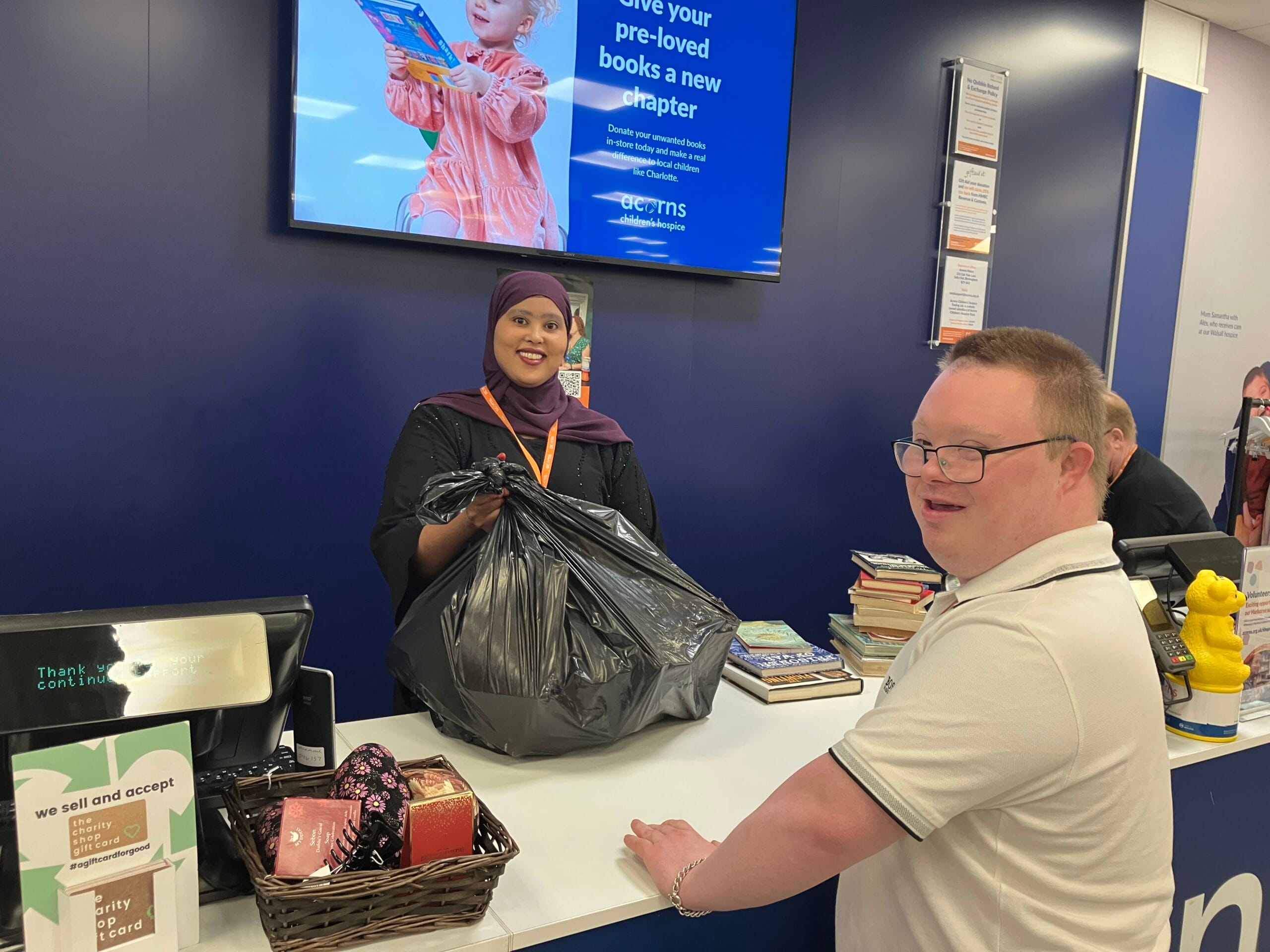
You can bring suitable pre-loved items to your local Acorns charity shop.

2. It is sorted

Every donation is carefully sorted by our staff and volunteers to identify what can be sold.

3. Good-quality items are sold

Suitable donations are prepared for sale in our charity shops, giving them the opportunity to find a new owner.

4. The money raised supports hospice care

Funds raised through our shops help provide vital care and support for local children with short lives and their families.

That is why a simple check before you donate really can go a long way.

A quick check before you donate

Before putting something into your donation bag, ask:

  • Is it clean, dry and safe?
  • Are all the parts there and is it complete?
  • Does it work?
  • Would someone realistically buy and use it?

If the answer is yes, there’s a much better chance your donation can find another home and raise money for Acorns.

If you’re unsure whether we can accept something, particularly furniture, electrical items or unusual donations, check our latest guidance first.

What you can donate to Acorns

Good donations can make an even bigger difference

People donate to Acorns because they want to help, and we are incredibly grateful for that support.

Good-quality donations allow us to make the most of that generosity.

Items that can be sold help keep pre-loved goods in circulation, reduce unnecessary waste and give our shops another opportunity to raise vital funds for children and families.

A quick check really can help your donation go further.

Find your Acorns charity shop