
Big play day
Bring people together and make a whole event out of play.
A Big Play Day is your chance to fill an afternoon or day with games, activities, refreshments and fundraising. Keep it simple with a few favourites or create a bigger event with different activity stations for people to explore.
How the activity works
Choose a venue and put together a mix of playful activities that people can enjoy throughout the event.
You could include:
- Traditional playground games
- Giant garden games
- Board games
- Craft activities
- Races and challenges
- A childhood quiz
- A treasure hunt
- Face painting
- Refreshments or a bake sale
- A dress-up competition
People could make a donation to attend, donate to take part in individual activities or buy refreshments with the proceeds going towards your fundraising.
You do not need to include everything. A few well-chosen activities can make a brilliant Play Day.
Plan your activity
- Decide who your Play Day is for.
- Choose a date, time and suitable venue.
- Pick the games and activities you want to include.
- Ask others to help you run different parts of the event.
- Decide how you will raise money.
- Promote your event and invite people along.
- Set everything up and enjoy a day of play.

How to raise money
Choose one simple fundraising idea or combine a few approaches to suit your group, activity and available time.
There is no required fundraising target. Choose an amount that feels realistic for the size of your group and focus on making it easy and enjoyable for people to get involved.
You could:
- Ask everyone taking part for a suggested donation
- Charge a small entry fee
- Ask people to sponsor participants
- Invite donations for additional attempts
- Charge teams to enter a tournament
- Ask people to donate to vote for the winner
- Combine the challenge with refreshments, a raffle or bake sale
- Set up an online fundraising page
Helpful things to think about
Adapt it for your group
Schools and colleges
Run your Play Day as a special afternoon, enrichment activity or part of a wider Be a Kid Week event.
Set up different stations around a hall, playground or classroom area and let pupils move between activities.
You could include playground games, crafts, quizzes, simple challenges and refreshments.
For older students, you could invite them to help plan or run activity stations for younger pupils.
Taking part should remain optional. Pupils who do not want to join a particular activity can help organise, keep score or support others.
Businesses
Turn an afternoon, team day or workplace social into a Big Play Day.
Set up a few activity stations, split colleagues into teams or let people drop in throughout the day.
You could combine board games, quick challenges, a quiz and nostalgic food to create a relaxed event without needing a full day away from work.
Hybrid teams could run smaller activities in different locations and combine results or photographs online.
Community groups
Use a regular meeting, community venue or outdoor space to create a Play Day that brings people together.
Choose activities that suit the ages and interests of your group and ask members or volunteers to help run different stations.
You could also invite families, friends or other local groups to join you and turn it into a wider community event.
Families and individuals
Keep it small and informal with a garden, park or living-room Play Day.
Choose a few favourite games, invite friends or family and add snacks, music or a treasure hunt.
You could ask everyone to make a donation to join in or set a shared fundraising target for the day.
What you will need
What you need will depend on the activities you choose, but could include:
- Games and activity equipment
- Tables and chairs
- Signs or simple activity instructions
- Refreshments
- Pens, score sheets or craft materials
- Helpers or volunteers
- A way to collect donations
- Any permissions required for your chosen venue
Try to use equipment you already have or borrow items from friends, colleagues or group members where possible.
Make it safe and inclusive
Choose activities that suit the space, ages and abilities of the people taking part.
Include a mix of physical and non-physical activities so there are different ways for people to get involved.
Make sure walkways and activity areas are clear and avoid running games in cramped spaces or near hazards.
If your event is open to a wider audience, think about access, toilets, first aid, refreshments and appropriate supervision.
If children or young people are involved, follow your organisation's usual safeguarding arrangements.
You do not need to make every activity competitive. Give people the option to play casually, help run an activity, donate or simply enjoy being part of the day.
The aim is to create a welcoming space where everyone can make time to play while helping raise money for Acorns.
Looking for another idea?
Explore more playful fundraising ideas in the Be a Kid Week Play Hub.
Why your fundraising matters
Be a Kid Week is part of the Acorns Time Machine appeal .
The money you raise will help power the specialist care Acorns provides to children with short lives and their families. By managing pain, symptoms and medication and providing expert care whenever it is needed, Acorns helps families make more of the time they have together.
Your activity will help give seriously-ill children more time to simply be kids.


Ready to help childhood take over?
Sign up to Be a Kid Week and download your free fundraising pack, full of ideas and practical guidance to help you get started.

The big kid buffet
What food takes you straight back to childhood?
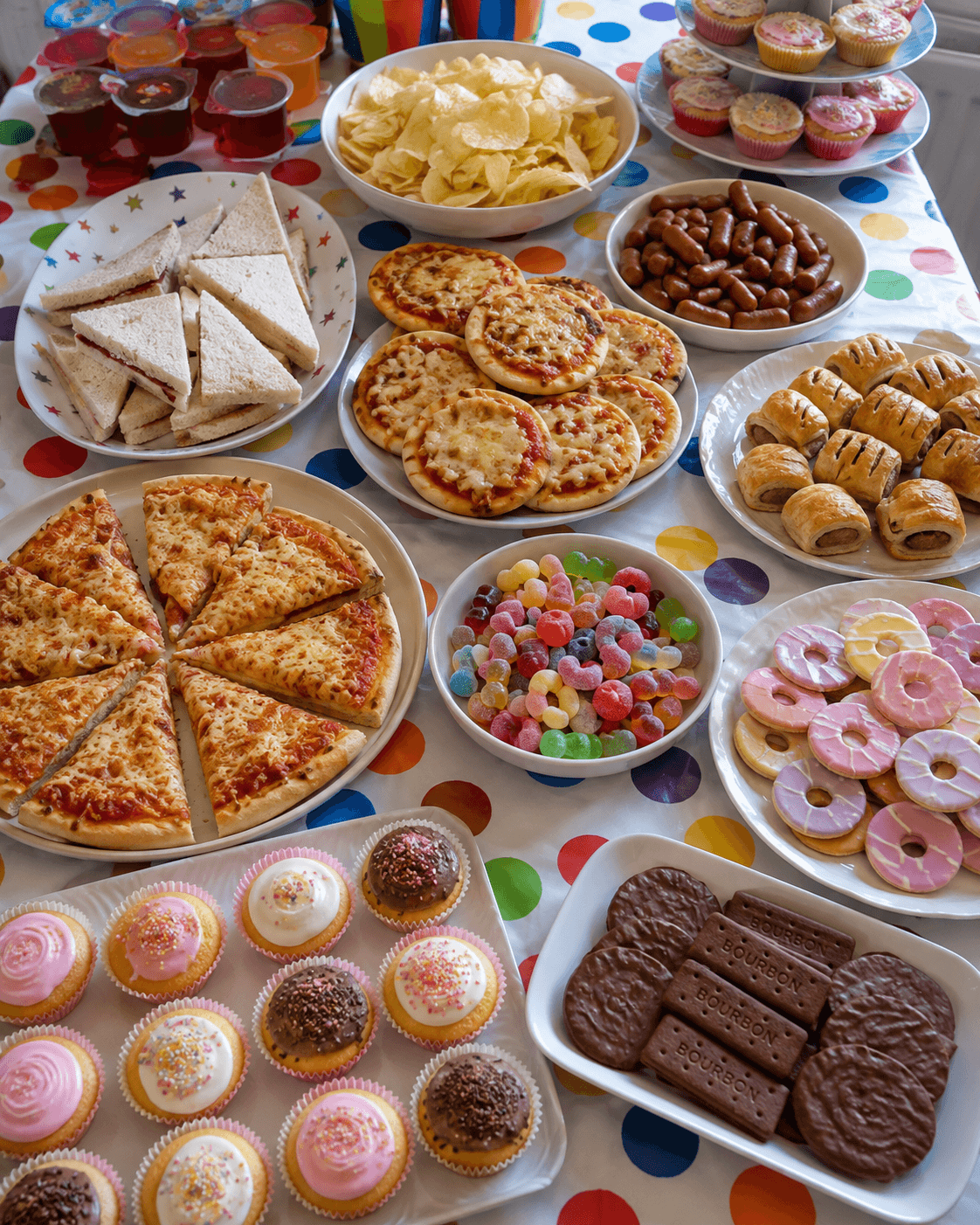
Bring back lunchbox favourites, party food and nostalgic treats with a Big Kid Buffet. Get people together, share the foods you remember growing up with and raise money during Be a Kid Week.
How the activity works
Invite everyone to bring, make or choose something that reminds them of childhood.
Your buffet could include:
- Favourite lunchbox snacks
- Childhood party food
- Sandwiches cut into triangles
- Classic biscuits
- Crisps and sweets
- Homemade cakes
- Retro desserts
- Favourite family recipes
You could ask everyone to make a donation to join the buffet, donate what they would normally spend on lunch or contribute towards a shared fundraising target.
To make it more playful, you could vote for the most nostalgic dish, add a childhood playlist or ask people to guess who chose each favourite.
Plan your activity
- Choose a date, time and place for your buffet.
- Invite people to bring or choose a childhood favourite.
- Decide how you will collect donations.
- Make sure there is a good mix of food and drinks.
- Add any extra nostalgic touches, such as music, decorations or a vote.
- Bring everyone together and enjoy your Big Kid Buffet.
How to raise money
Choose one simple fundraising idea or combine a few approaches to suit your group, activity and available time.
There is no required fundraising target. Choose an amount that feels realistic for the size of your group and focus on making it easy and enjoyable for people to get involved.
You could:
- Ask everyone taking part for a suggested donation
- Charge a small entry fee
- Ask people to sponsor participants
- Invite donations for additional attempts
- Charge teams to enter a tournament
- Ask people to donate to vote for the winner
- Combine the challenge with refreshments, a raffle or bake sale
- Set up an online fundraising page
Helpful things to think about
Adapt it for your group
Businesses
Turn an ordinary lunch break into a nostalgic shared meal.
Ask colleagues to bring in something they remember from childhood or organise a buffet where everyone contributes.
You could run a vote for the most nostalgic dish, best lunchbox throwback or most unexpected childhood favourite.
Hybrid teams could take part by sharing photos of their chosen food and childhood memories online.
Community groups
Use a regular meeting, social event or club night as the setting for your buffet.
Ask members to bring a favourite food from childhood and, if they want to, share the story behind it.
For groups with a wide age range, this can be a great way to compare the foods different generations remember growing up with.
Families and individuals
Create a nostalgic lunch or tea at home with friends or family.
Everyone could choose one favourite childhood food, recreate an old family recipe or build a buffet made entirely from things you remember growing up with.
You could ask guests to donate to take part or set a fundraising target for the meal.
What you will need
- Food and drinks
- Plates, cups and cutlery
- Somewhere to sit and eat together
- Food labels
- Allergen information
- Optional decorations or a childhood playlist
- A way to collect donations
You do not need to buy lots of special food. The fun comes from choosing things that mean something to the people taking part.
Make it safe and inclusive
Make sure all food is clearly labelled, particularly anything homemade.
Include information about common allergens and try to provide options for different dietary requirements so everyone can take part comfortably.
Do not pressure anyone to eat or bring food they do not want to.
If children or young people are involved, follow your usual supervision and food safety arrangements.
If you are organising the buffet through a workplace or community venue, check whether there are any local rules around bringing in, preparing or serving food.
Keep the focus on sharing memories and enjoying time together rather than recreating childhood food perfectly.
Looking for another idea?
Explore more playful fundraising ideas in the Be a Kid Week Play Hub.
Why your fundraising matters
Be a Kid Week is part of the Acorns Time Machine appeal .
The money you raise will help power the specialist care Acorns provides to children with short lives and their families. By managing pain, symptoms and medication and providing expert care whenever it is needed, Acorns helps families make more of the time they have together.
Your activity will help give seriously-ill children more time to simply be kids.
Ready to help childhood take over?
Sign up to Be a Kid Week and download your free fundraising pack, full of ideas and practical guidance to help you get started.
Childhood quiz
How well do you remember the things you grew up with?
Put your childhood knowledge to the test with a nostalgic quiz covering television, toys, games, sweets, music and memories. Bring people together, spark plenty of conversation and raise money during Be a Kid Week.
How the activity works
Choose someone to be your quizmaster and use our ready-made Childhood Quiz template to get started.
It is packed with nostalgic questions designed to get people talking, laughing and remembering the things they grew up with.
You can use the quiz as it is or add a few questions of your own to make it more personal to your workplace, group, friends or family.
Ask people to make a donation to take part, charge an entry fee per team or add a few extra fundraising games between rounds.
Plan your activity
- Choose a date, time and place for your quiz.
- Download the Childhood Quiz template .
- Decide whether you want to use it as it is or add some questions of your own.
- Choose a quizmaster.
- Invite people to take part individually or in teams.
- Decide how you will collect donations.
- Keep score and celebrate your winners.

How to raise money
Choose one simple fundraising idea or combine a few approaches to suit your group, activity and available time.
There is no required fundraising target. Choose an amount that feels realistic for the size of your group and focus on making it easy and enjoyable for people to get involved.
You could:
- Ask everyone taking part for a suggested donation
- Charge a small entry fee
- Ask people to sponsor participants
- Invite donations for additional attempts
- Charge teams to enter a tournament
- Ask people to donate to vote for the winner
- Combine the challenge with refreshments, a raffle or bake sale
- Set up an online fundraising page
Helpful things to think about
Adapt it for your group
Businesses
Turn a lunch break, team meeting or after-work get-together into a Childhood Quiz.
Departments could compete against each other, or you could mix teams so colleagues from different areas work together.
For hybrid teams, run the quiz online and let people join from different locations.
You could also add a bonus round using childhood photographs of colleagues and ask teams to guess who is who.
Community groups
Use a regular meeting or social evening as the setting for your quiz.
If your group includes a wide range of ages, encourage people to work in mixed teams so different generations can bring different knowledge to the table.
You could also invite members to contribute an extra childhood-themed question or memory to add to the event.
Families and individuals
Host a quiz night at home with friends or family.
Split into teams, invite another household to join you or run the quiz online if people are in different places.
You could ask everyone to make a donation to play, set a fundraising target for the evening or add a small prize for the winning team.
What you will need
- Our Childhood Quiz template
- Pens and answer sheets, or an online way to submit answers
- A quizmaster
- A way to keep score
- A suitable space or video call
- Optional prizes for the winning team
- A way to collect donations
You can keep things simple. The ready-made quiz gives you everything you need to get started without having to write the questions yourself.
Make it safe and inclusive
Make sure everyone has a fair opportunity to contribute by playing in teams and keeping the competition light-hearted.
If you add your own questions, avoid anything that could embarrass someone or rely on personal information unless they are happy for it to be shared.
If you use childhood photographs of colleagues, friends or family, always ask permission before including them in the quiz or sharing them more widely.
People who do not want to answer questions can still take part by keeping score, helping the quizmaster, donating or supporting a team.
The aim is to have fun remembering the things that made childhood special while raising money for Acorns.
Looking for another idea?
Explore more playful fundraising ideas in the Be a Kid Week Play Hub.
Why your fundraising matters
Be a Kid Week is part of the Acorns Time Machine appeal .
The money you raise will help power the specialist care Acorns provides to children with short lives and their families. By managing pain, symptoms and medication and providing expert care whenever it is needed, Acorns helps families make more of the time they have together.
Your activity will help give seriously-ill children more time to simply be kids.
Ready to help childhood take over?
Sign up to Be a Kid Week and download your free fundraising pack, full of ideas and practical guidance to help you get started.
Dress like a kid day
Take inspiration from a nostalgic fashion trend, dress as a favourite childhood character, recreate an outfit from an old photo, become the person your younger self dreamed of being or turn it into a playful non-uniform day at school.
A Dress Like a Kid Day is an easy way to bring people together, start conversations and raise money during Be a Kid Week.
How the challenge works
Choose a day when pupils, students, colleagues or group members can replace their usual uniform or work clothes with something inspired by childhood.
Keep the theme broad and flexible so that everyone can take part without needing to buy a costume or new outfit.
Choose your theme
People could:
- Wear an old school uniform or school-inspired outfit
- Take inspiration from the decade they grew up in
- Dress as a favourite childhood character
- Become the person they wanted to be when they grew up
- Recreate a favourite childhood outfit or old photograph
- Take part in a simple non-uniform or mufti day
Taking part should always be optional. People who do not want to dress up can still donate, share a childhood photograph or support the campaign in another way.
Plan your challenge
- Choose your theme
- Pick a date
- Get permission
- Plan your fundraising
- Invite people to take part
- Dress up, fundraise and share

How to raise money
Choose one simple fundraising idea or combine a few approaches to suit your group, activity and available time.
There is no required fundraising target. Choose an amount that feels realistic for the size of your group and focus on making it easy and enjoyable for people to get involved.
You could:
- Ask everyone taking part for a suggested donation
- Charge a small entry fee
- Ask people to sponsor participants
- Invite donations for additional attempts
- Charge teams to enter a tournament
- Ask people to donate to vote for the winner
- Combine the challenge with refreshments, a raffle or bake sale
- Set up an online fundraising page
Helpful things to think about
Adapt it for your group
Schools and colleges
Run the activity as a non-uniform day, themed dress-up day or student-led challenge.
Younger pupils could wear a favourite playful outfit or dress as something they would like to be when they grow up.
Older students may prefer a nostalgia theme, childhood photograph recreation or a “what I wanted to be when I grew up” challenge.
Taking part should remain optional. Pupils and students should still be able to donate or support the day without dressing up.
Businesses
Invite colleagues to take part in the office, remotely or across different locations.
You could hold a competition for the most creative outfit, recreate childhood photographs or ask colleagues to match childhood pictures to the correct person.
Remote workers could share photographs or join a team call in their chosen outfit.
People who do not want to dress up can still donate, vote in a competition or share a childhood memory.
Community groups
Turn a regular meeting or get-together into a Dress Like a Kid Day and invite members to take part in a way that suits your group.
You could choose a shared theme, recreate childhood photographs, dress as favourite childhood characters or run a simple competition for the most creative outfit.
Anyone who does not want to dress up can still donate, vote, share a childhood memory or help organise the activity.
Taking part should remain optional. Pupils and students should still be able to donate or support the day without dressing up.
What you will need
You will need:
- A date for your activity
- Permission from your school, college or workplace
- A clear theme or explanation of the day
- A simple way to tell people how to take part
- An online fundraising page or agreed method for collecting donations
- Optional childhood photographs
- Optional prizes for competitions
Nobody should need to purchase a new outfit to take part. Encourage people to use clothes, accessories and other items they already have.
Make it safe and inclusive
Make sure that the theme allows people to participate in a way that feels comfortable for them.
Avoid costumes, clothing or themes that could cause offence, reinforce stereotypes or make other people feel uncomfortable.
People should always be able to participate without dressing up. They could instead donate, share a childhood photograph or support another part of the activity.
Schools and colleges should follow their usual policies on:
- Clothing
- Safeguarding
- Photography
- Appropriate themes
- Participation and inclusion
Workplaces should also consider their usual dress requirements, particularly where clothing could affect health, safety or the ability to complete particular roles.
Looking for another idea?
Explore more playful fundraising ideas in the Be a Kid Week Play Hub.
Why your fundraising matters
Be a Kid Week is part of the Acorns Time Machine appeal .
The money you raise will help power the specialist care Acorns provides to children with short lives and their families. By managing pain, symptoms and medication and providing expert care whenever it is needed, Acorns helps families make more of the time they have together.
Your activity will help give seriously-ill children more time to simply be kids.
Ready to help childhood take over?
Sign up to Be a Kid Week and download your free fundraising pack, full of ideas and practical guidance to help you get started.