

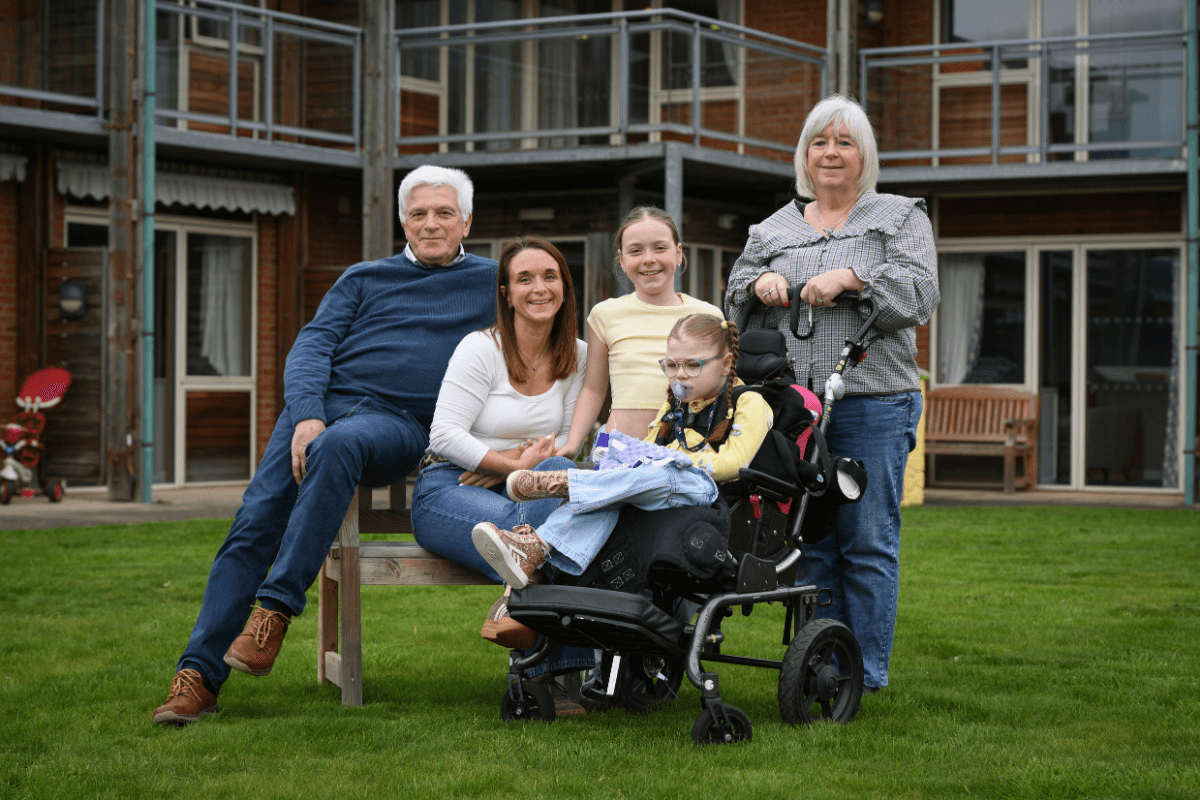
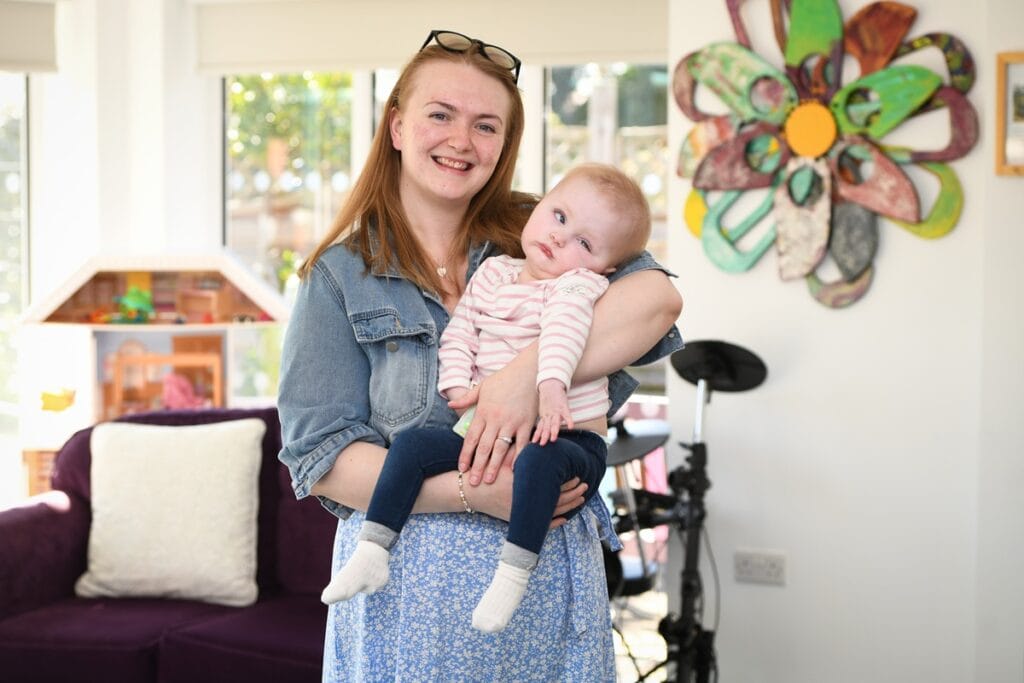

The other thing you’ll see is that she is ‘a little girl in a wheelchair’.
But what you can’t see is how much care Polly needs, how quickly things can change and how her mum Amy can ‘never switch off’.
For Amy, time exists on a loop. There is no real pause. Care runs through every hour of every day and night. Polly needs 12 to 15 medications across seven different times in a 24-hour cycle, alongside tube feeding, oxygen and constant monitoring. Seizures can come without warning. Home is ‘set up like a hospital’.


Amy says: “People see Polly in a wheelchair and think that must be hard. But it is not just looking after her, it’s the mental load. Constantly fighting for her basic needs, thinking and planning, ordering medications, speaking to consultants, chasing things up. That’s the hardest part.”
Polly has Aicardi syndrome, a rare, life-limiting neurological condition that occurs almost exclusively in girls and affects the brain, eyes and organs. She is one of only around 4,000 children worldwide with the condition. She also has drug-resistant epilepsy and highly complex medical needs.
Her prognosis has always been uncertain. Amy was initially told it was unlikely Polly would reach her first birthday, and that even then, life expectancy for children with Aicardi syndrome is around eight years old.
Polly is nine – a ‘bonus year’ Amy feels incredible lucky for. She carries the weight of that knowledge every day, never quite knowing how much more time they have together.

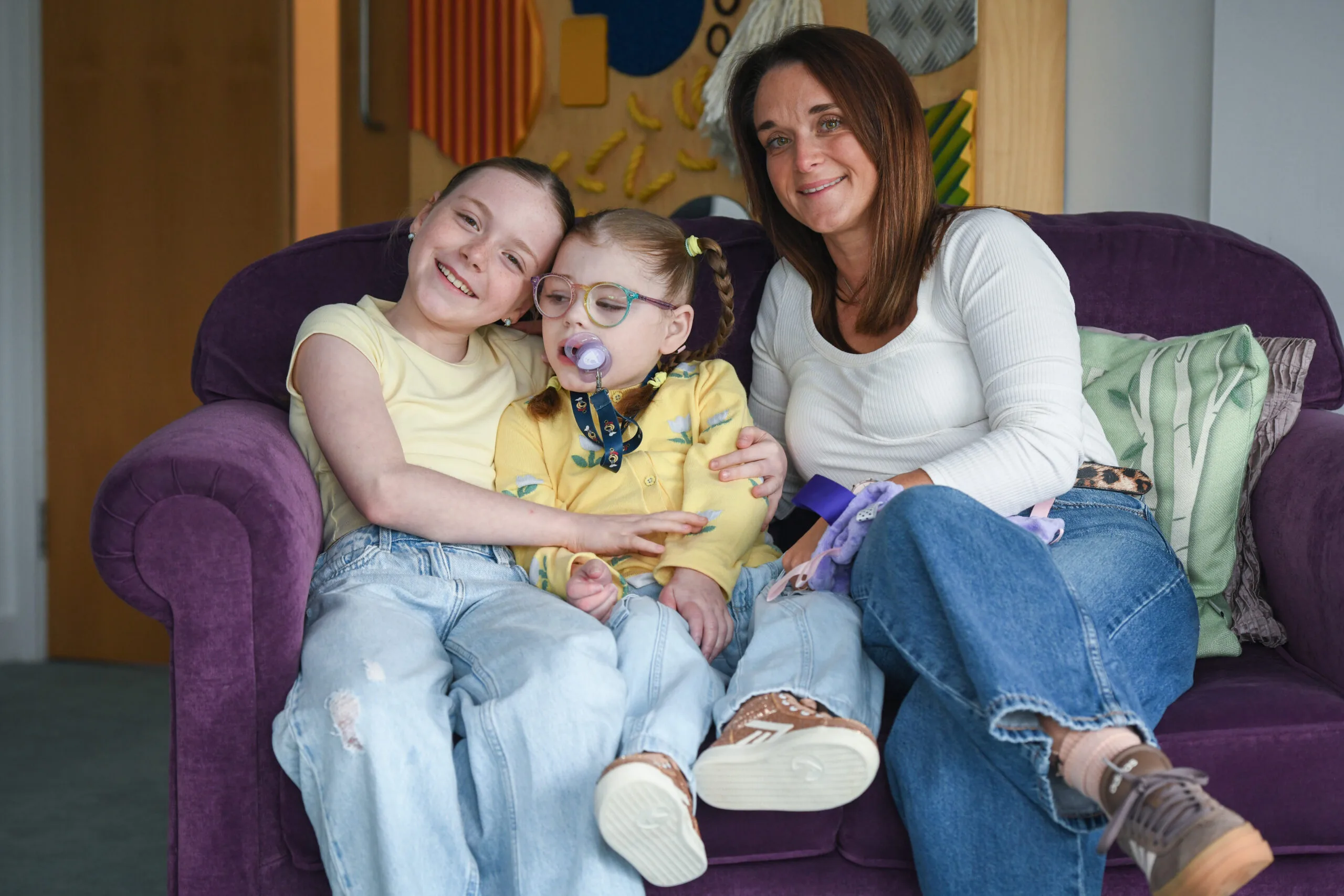
Amy is also mum to Polly’s big sister, 11-year-old Nancy. Balancing her time as mum, nurse and carer means constantly shifting between roles, trying to hold onto a sense of normal family life while managing care that never stops.
“Polly’s condition restricts Nancy’s life,” Amy says. “Nancy’s world is getting smaller, and that is hard to watch.”
Life for Amy’s family is measured in routines and urgency. Even simple things like a food shop require planning, careful timing and help: “We’re always on a timetable. Everything is just crammed into these little pockets of time in between the care.”
What Acorns gives them in the middle of all of this is something vital – time that is not dominated by fear, guilt, appointments, medications or constant vigilance.
The weight of responsibility – that never leaves Amy when at home – is carried by highly-specialist nurses at Acorns who understand Polly’s complex needs, her medications and how to manage her symptoms.


But Acorns is more than vital care. It’s emotional support for Amy and her family too, helping them navigate the parts of life that feel too heavy to carry alone.
From helping Amy make decisions no parent should ever have to make and ‘removing some of the fear’, to helping Nancy ‘feel less alone’ and understand that ‘the emotions she battles are normal’.
At its heart, Acorns gives Amy time to be someone she rarely can: “I can just be mum.”
“I don’t want to be a carer, or a nurse, or a PA. I do not want to be any of those things. I just want to be ‘mum’.”
And in a life where every moment matters, that changes everything.


At Acorns, we give families time for the important stuff by taking care of the serious stuff, managing pain, symptoms and medication and providing end-of-life care with skill and compassion.
Our Time Machine appeal powers this specialist care and support, helping more families of children like Polly make time for what matters most: being together, doing what they love.


Choose a one-off donation or give monthly to help Acorns protect moments of care, comfort, play and family life for children like Polly.
Select an amount or enter your own.
You’ll be taken to our secure donation page.